
From staff shortage to productivity
Why reliable data is the quiet engine behind productivity

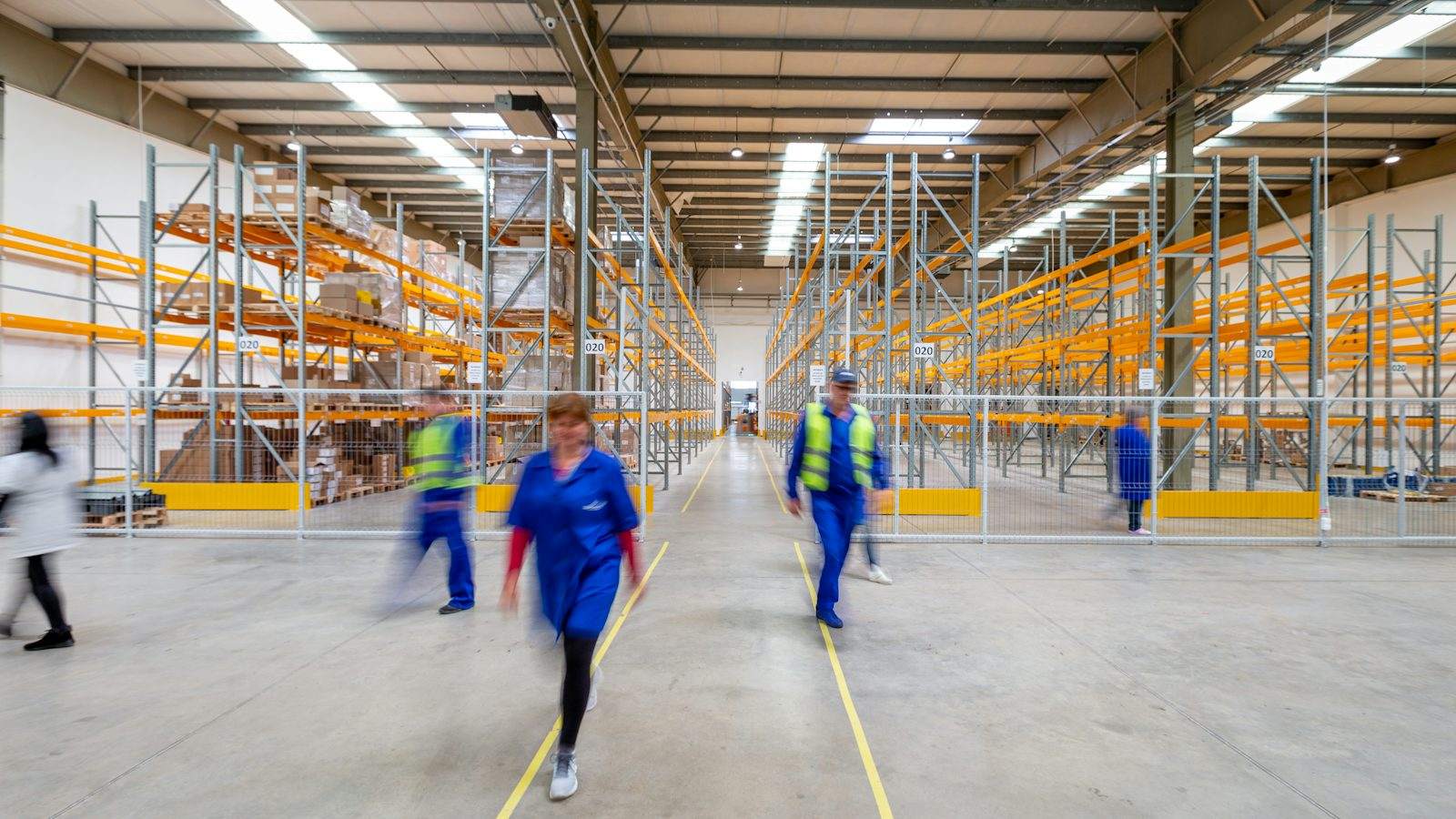
Every organisation is looking for people. In healthcare, in local government, in wholesale: everywhere there's a shortage of hands. Yet you rarely hear anyone say that data has anything to do with it.
And that's exactly where the blind spot is.
There's plenty of talk about staff shortages and little about the waste poor data causes. Every day, hours are lost to fixing errors, entering things twice and searching for the right information. What seems small, a wrong field, a missing report, one check too many, builds up into a structural workload.
Poor data makes the shortage visible, and it makes it bigger too. People are busy with work that shouldn't really be necessary.
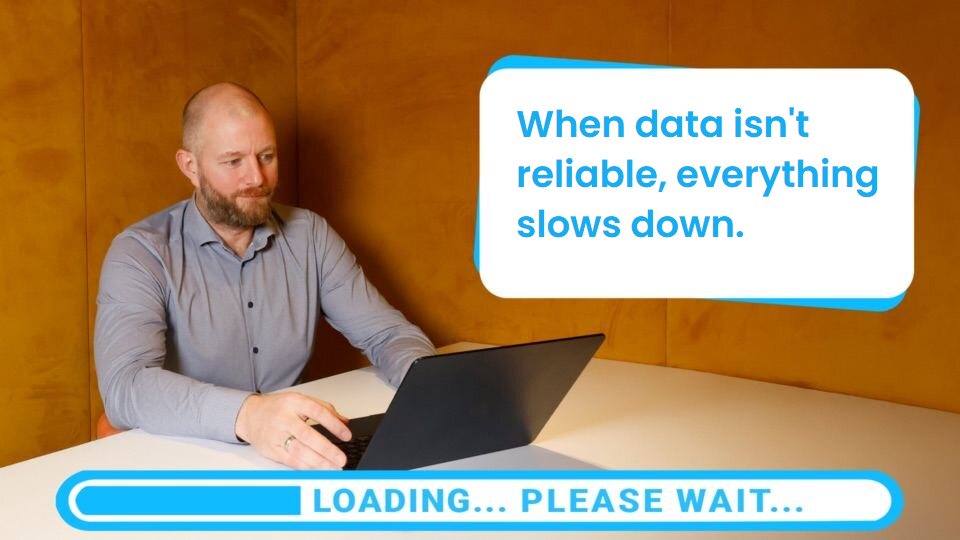
The hidden inefficiency
In many organisations, correcting small errors or searching for missing information has become a natural part of the job.
It comes with the territory, and in the handover to a new colleague it gets passed along without batting an eyelid.
Nobody really remembers why it ever got that way.
Everyone does their best within the systems that exist, and so things keep running. Yet there's a quiet inefficiency in that: fixing the same errors, over and over, costs time and energy that could be better spent.
Because the data doesn't always keep up with practice.
Without anyone consciously choosing it, noise creeps into the process. And that has an effect, on productivity, on motivation, on the room to think ahead.
The cause is rarely complex: often it's simply outdated, incomplete or inconsistent data. And that is exactly where there's something to gain
Investing time to get time back
The paradox is clear: there's often no time to work on data quality, because you lose that time to its consequences.
Cleaning up feels like delay, yet it's the fastest way forward. Every hour you invest in better data pays for itself many times over in calm, overview and productivity.
No tool solves this by itself. There's no silver bullet, and certainly no AI that suddenly makes poor data good.
Improvement starts with people who stop for a moment and look together at how to solve it structurally.
The productivity triangle
Real efficiency is about how people, processes and data fit together.
People make the difference, processes give direction and data makes sure everyone works with the same facts.
The bigger an organisation gets, the harder it is to keep that cohesion. Every department works with its own systems, defi
nitions and priorities. And that's where most time is lost.
Because every silo creates its own version of reality, with different expectations, different instructions and different interpretations of what "good" is.
Without an overview of the whole, you lose sight of where the work really stalls.
That's why data management is so valuable: it restores the connection between people, process and data.
Real improvement starts with setting expectations.
What do we mean by reliable data?
What do we consider important, and why?
When those agreements are clear, you get collaboration instead of noise, and room to move forward together.
The gain: focus, clout and room
When data becomes reliable, the energy in an organisation changes. Teams know what they can rely on and decisions are made faster.
The gain lies in clout, and yet another dashboard won't give you that: less rework, less doubt, more results.
Reliable data gives you room. It's the quiet engine that lets you do more with fewer people.
Data quality is a precondition for productivity.
And investing in that fuel may well be the smartest form of capacity expansion there is.
Written by Ruud Kuil
Co-founder of MAD-Quality. Helps leadership teams move from data chaos to data they dare to manage by. Want to know more about data quality? Follow Ruud on LinkedIn.